VocalJet blog

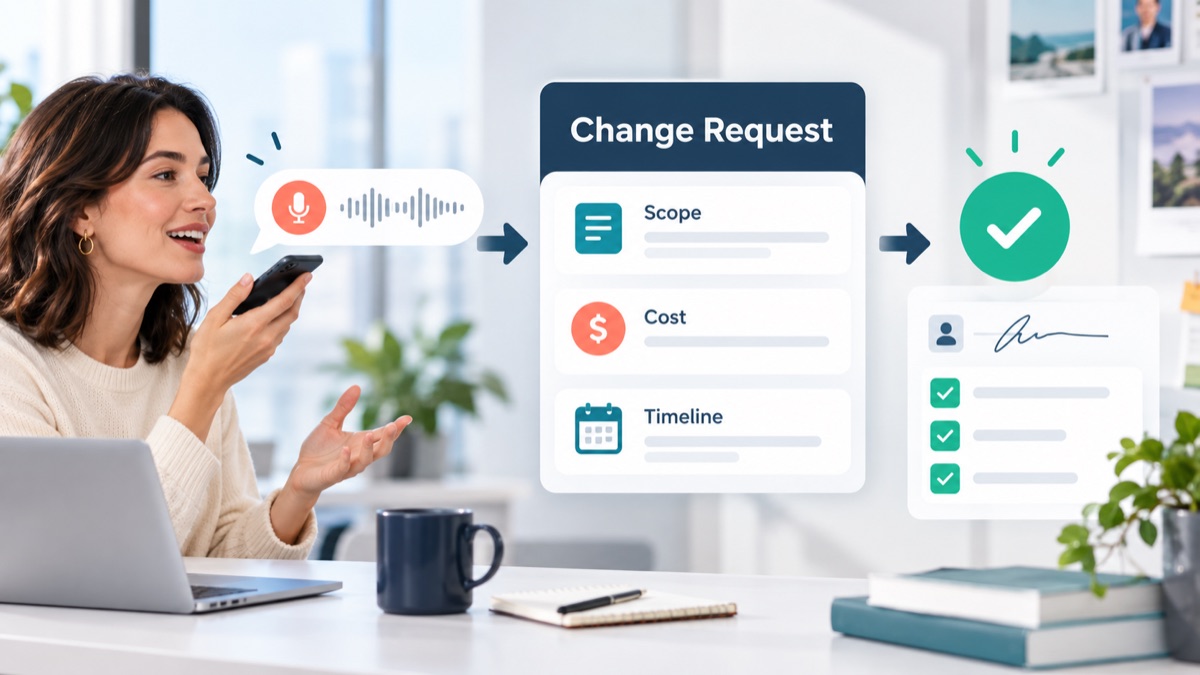
Client Change Request Workflow for Agencies: Template and Examples

Client change request workflow with voice note, scope impact, cost, timeline and approval

Client change requests are where many agency projects quietly lose margin. A client asks for “one more section,” a stakeholder adds a new requirement during feedback, or a voice note explains a useful idea that was never in the original plan. The request may be reasonable, but the workflow around it decides whether the agency protects scope or absorbs unpaid work.

A client change request workflow gives the team a calm way to capture the ask, assess impact, get the right decision and turn the result into action items. It is not a defensive script. It is a shared record that separates the client’s desired outcome from the scope, timeline, budget, dependencies and approval needed to deliver it.

This guide gives agencies, consultants, studios and freelancers a reusable change request template, a decision table, a raw voice-note example and an approval email. Use it when client feedback creates work that may change the project agreement.
Read More

Client Retainer Workflow for Agencies: Intake, Feedback and Scope Control

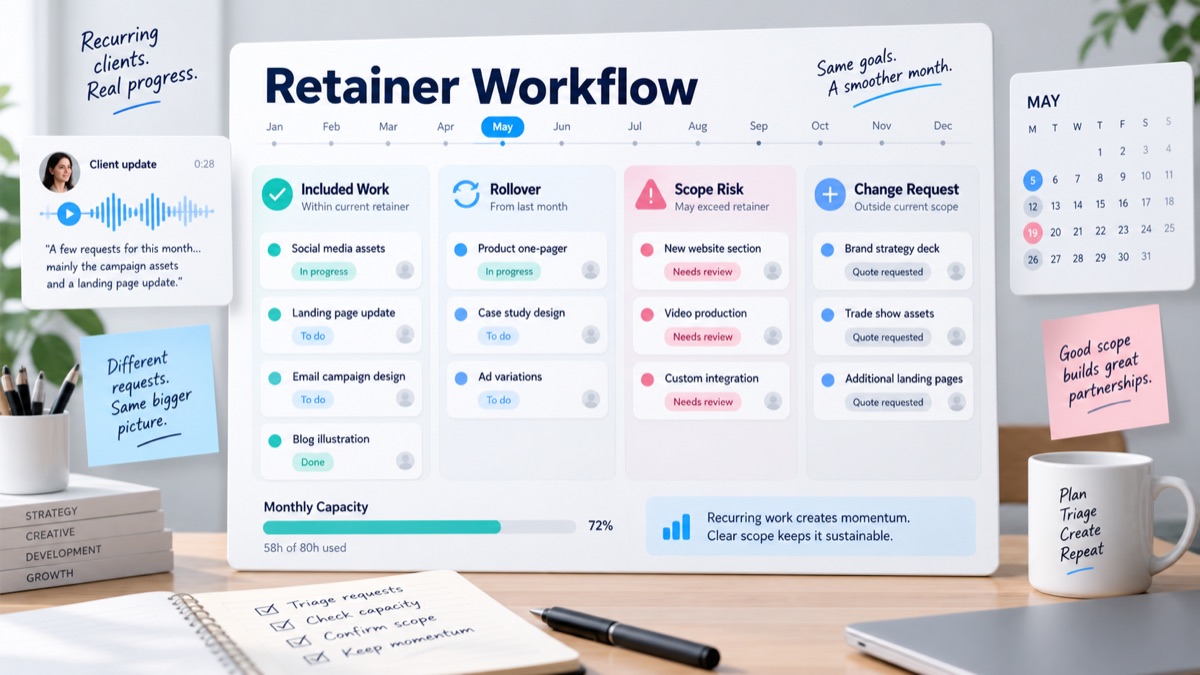
Client retainer workflow with a monthly board, capacity tracking and request categories

A monthly client retainer needs a repeatable way to turn incoming requests into agreed work. For agencies, consultants and creative studios, the difficulty often starts after the relationship is established: a client sends a quick voice note, another stakeholder adds feedback, and a small revision becomes an extra deliverable. Everyone expects progress, but nobody has checked what fits this month.

A client retainer workflow connects those conversations to the monthly plan. It records the requested outcome, checks the agreed service boundaries, identifies remaining capacity and gives the client a clear next step. It also distinguishes unfinished work from unused allowance, two things that can otherwise become a confusing promise about next month.

This guide provides a request triage table, a monthly operating rhythm and a reusable template. The example shows how spoken client feedback can become separate requests with scope questions, owners and follow-up text before the delivery team commits to dates.

Read More

Client Status Update Template for Agencies: Async Progress Without Extra Calls

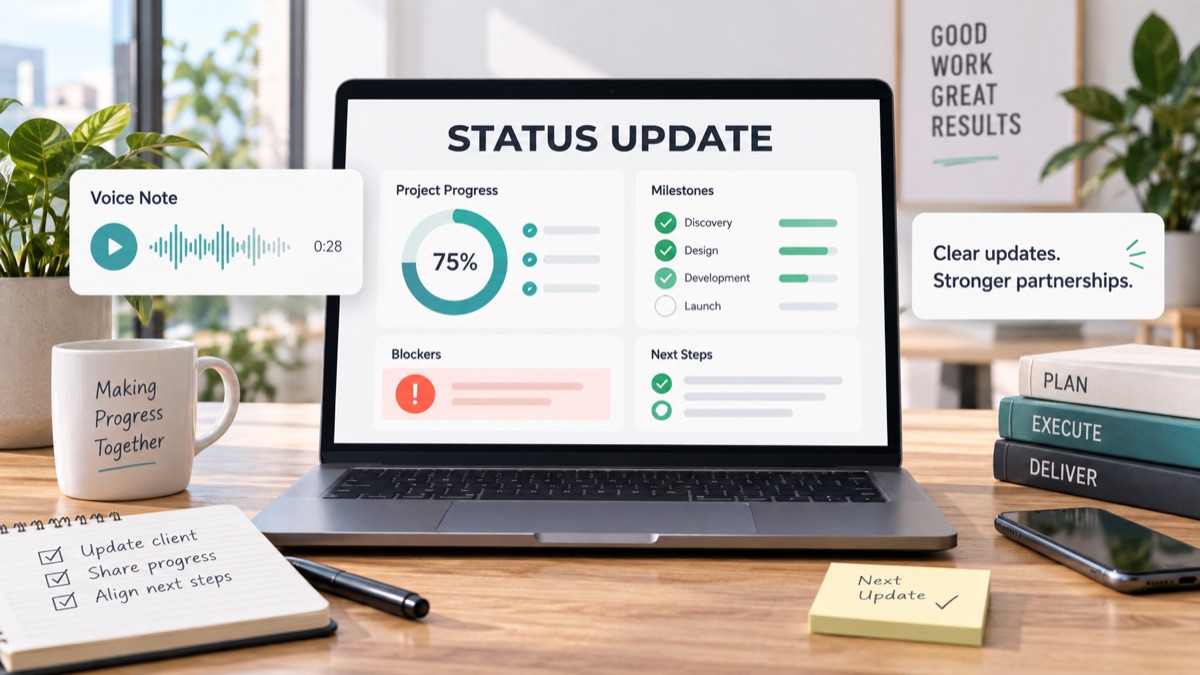
Client status update dashboard with voice note, milestones, blockers and next steps

Client status updates should make clients feel informed without creating another round of scattered questions. For agencies, consultants, studios and freelancers, the problem is not usually a lack of work. The problem is that progress, blockers, decisions, feedback, scope changes and next steps are split across tools, meetings, comments and voice notes.

A strong client status update turns that activity into a short, client-facing record. It says what changed, what is blocked, what needs a decision and what will happen next. It also gives the client a clear place to respond, so an update does not become a surprise meeting or an accidental scope expansion.

This guide gives you a reusable status update template, an async workflow and a raw voice-note-to-client-update example. Use it when the client needs confidence and clarity, but the project does not need another live call.

Read More

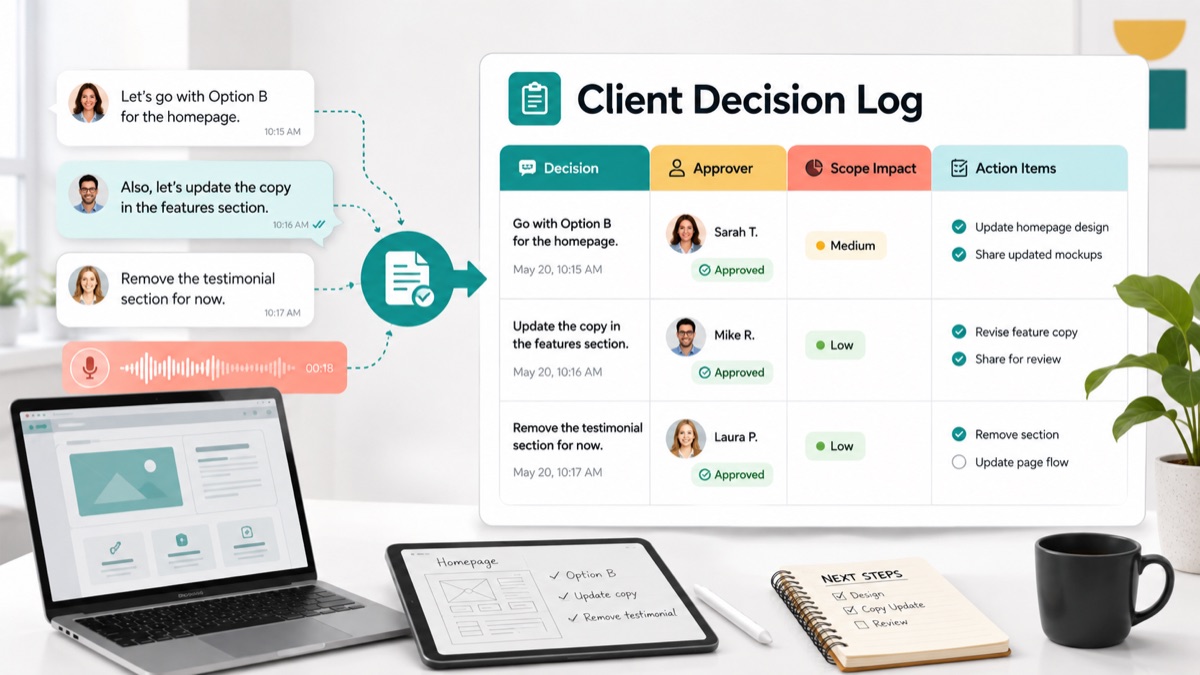
Client Decision Log for Agencies: Template, Workflow and Examples

Client Decision Log for Agencies

Client decisions often disappear into the busiest parts of agency work. A client says “option B is fine” in a voice note. A stakeholder approves a layout in a comment thread. Someone changes the launch order during a call. Two weeks later, the team is asking who approved what, why the scope changed and which action items were supposed to follow.

For agencies, consultants, creative studios and freelancers, the problem is not only documentation. The real problem is that client decisions affect delivery, scope, budget, feedback, approvals and trust. If decisions are scattered across calls, email, chat and design comments, the team loses the context it needs to move confidently.

This guide gives you a practical client decision log for agencies. It includes a copyable template, decision tables, a raw voice-note-to-decision-record example, a workflow for agencies and a FAQ you can use to keep approvals and action items searchable.

Read More

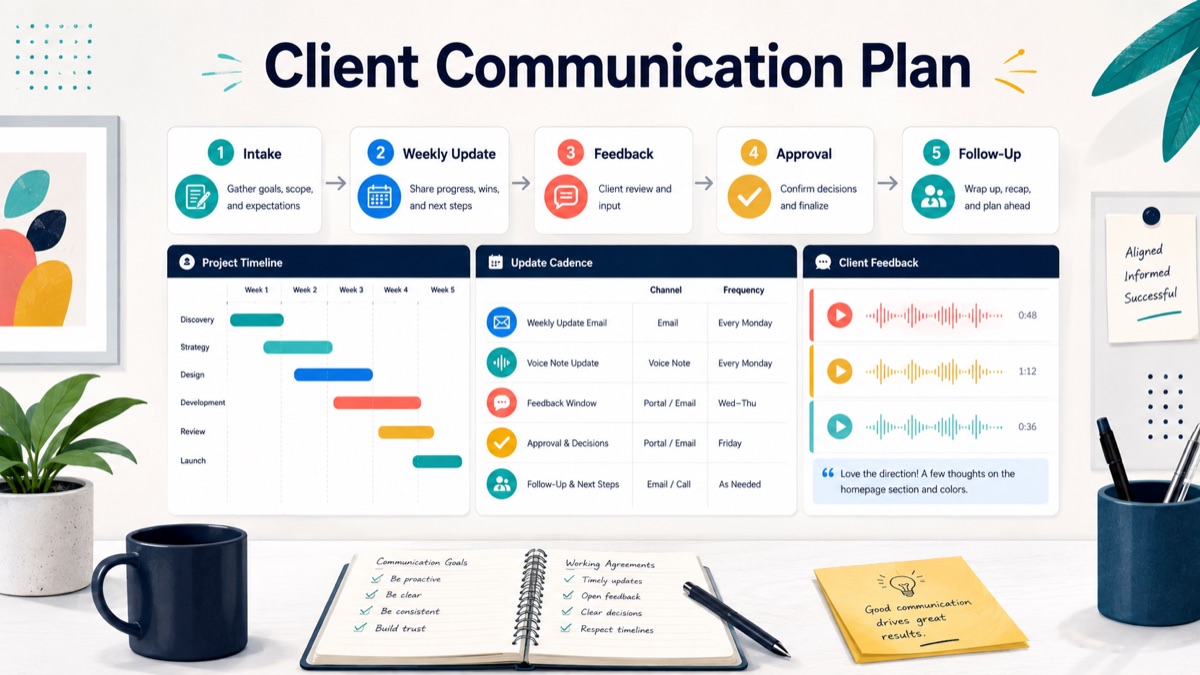
Client Communication Plan for Agencies: Async Updates, Feedback and Follow-Up

Client Communication Plan for Agencies

Most agency communication problems do not come from silence. They come from scattered updates, unclear channels, vague client feedback, missed follow-up and too many small questions becoming calls.

For agencies, consultants, creative studios and freelancers, a client communication plan is the operating agreement that tells both sides how updates, feedback, approvals, requests and risks will move through the project. Without it, the team spends delivery time answering “where are we?”, “who has this?”, “did we approve that?”, and “can we also add this?”

This guide gives you a practical client communication plan for agencies. It includes an update cadence, channel rules, client feedback workflow, voice-note prompt, before-and-after example, follow-up scripts and a template you can reuse on client projects.

Read More

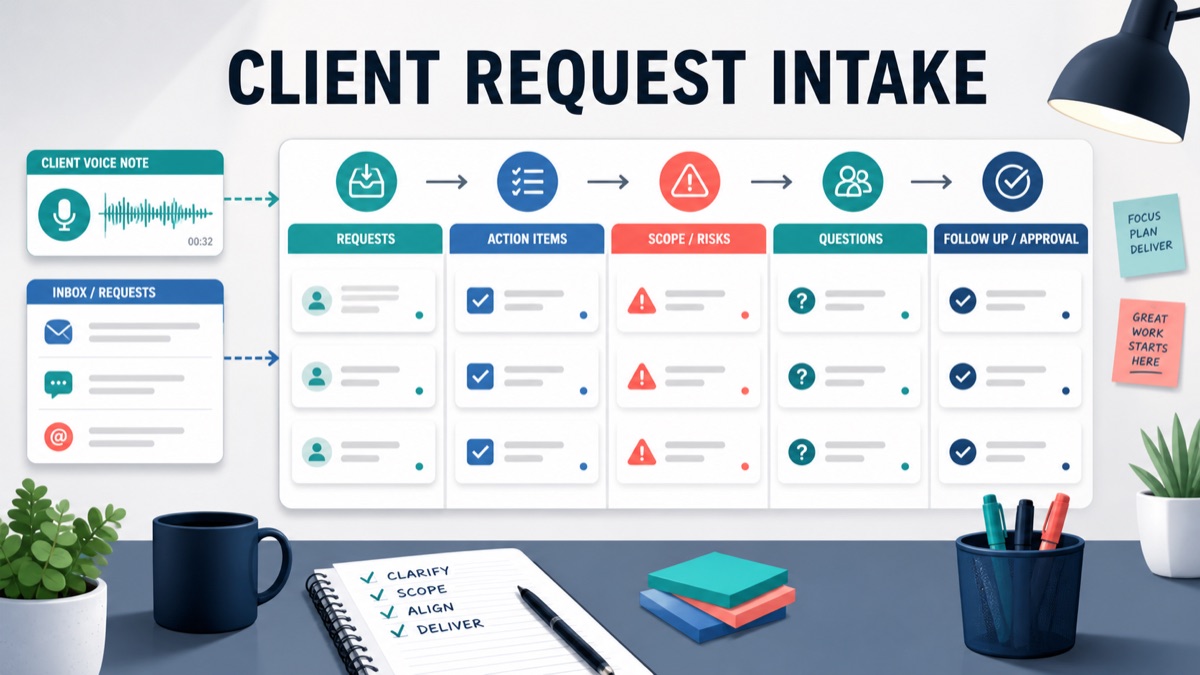
Client Request Intake Workflow for Agencies: From Vague Ask to Prioritized Work

Client Request Intake Workflow for Agencies

Client requests rarely arrive in the format an agency needs. They arrive as email threads, voice notes, Slack messages, review comments, screenshots, forwarded stakeholder feedback and “quick asks” attached to another conversation.

For agencies, consultants, creative studios and freelancers, the risk is not that clients ask for work. The risk is that every request becomes a task before anyone checks priority, owner, deadline, scope, dependencies or approval. That creates duplicated work, missed requests, unpaid revisions, scattered follow-up and unclear project status.

This guide gives client-facing teams a practical client request intake workflow. It shows how to capture requests, turn voice or written context into structured work, triage each request, protect scope and send a clear follow-up without scheduling another call.

Read More

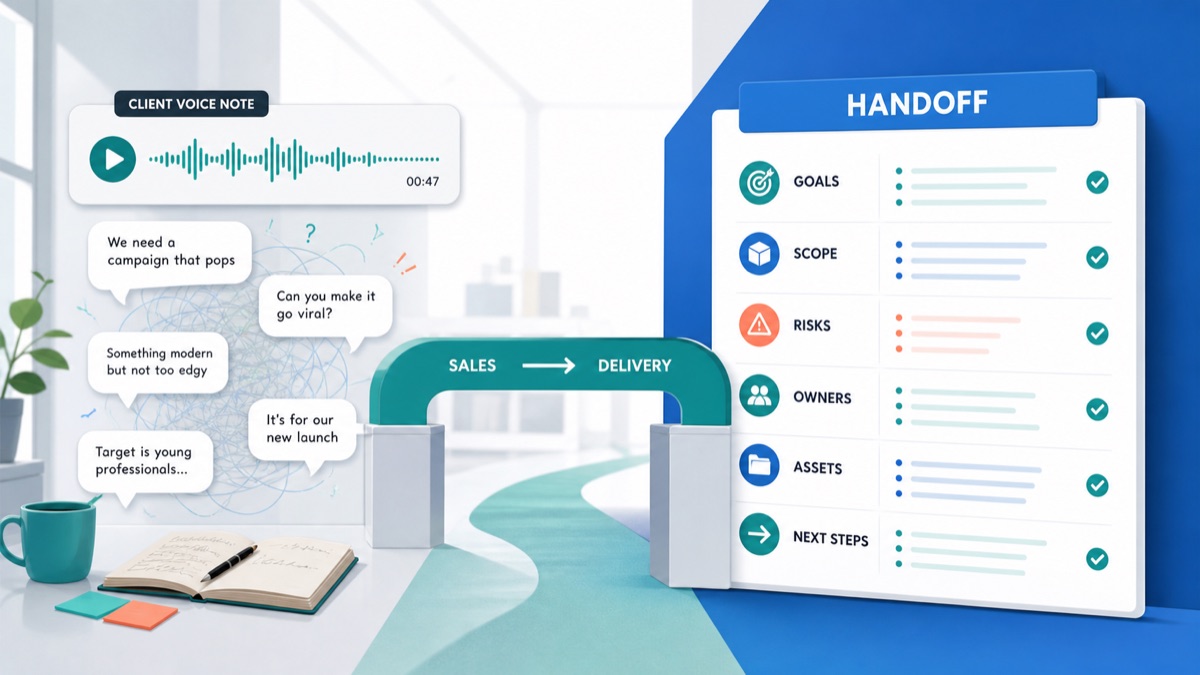
Client Handoff Checklist for Agencies: Sales to Delivery Without Lost Context

Client Handoff Checklist for Agencies

A client handoff is where a sold promise becomes delivery work. For agencies, consultants, creative studios and freelancers, this moment is risky because the client already explained goals, constraints and preferences during sales, but the delivery team often receives only a proposal, a Slack note or a rushed kickoff invite.

When the handoff is weak, the client has to repeat themselves, the project manager reconstructs scope from scattered notes, and the team starts delivery with missing context. That creates awkward clarification emails, kickoff rework, unpaid revisions and scope creep before the first real task begins.

This guide gives client-facing teams a practical handoff checklist for moving from sales or account ownership into delivery. It also shows how a short voice note can become a structured handoff brief, scope-risk list, action items and follow-up summary in VocalJet.

Read More

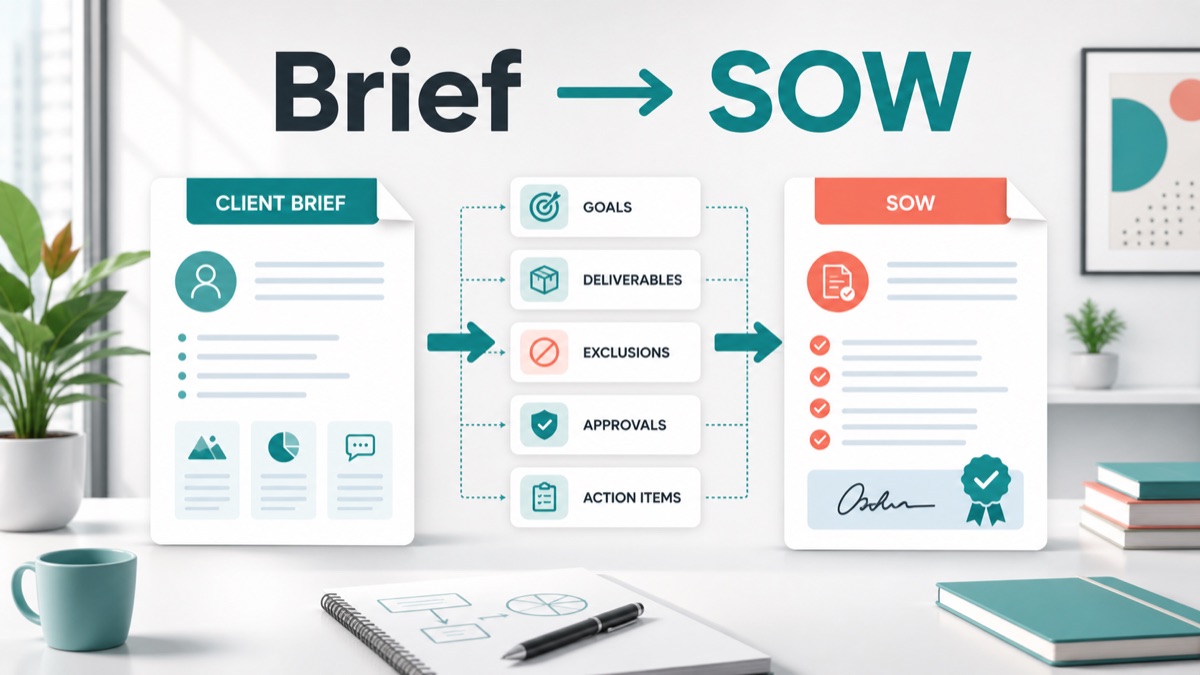
Client Brief vs Statement of Work: What Agencies Need Before Kickoff

Client Brief vs Statement of Work

A client brief and a statement of work are often treated like interchangeable documents. For agencies, consultants, creative studios and freelancers, that mistake creates risk before the project even starts.

The client brief explains the context: what the client wants, why it matters, who is involved, what constraints exist and what still needs clarification. The statement of work turns that context into commercial boundaries: deliverables, exclusions, responsibilities, timeline, acceptance criteria and change rules.

If the brief is vague, the SOW inherits assumptions. If the SOW is written too early, the team may price unclear work, miss hidden dependencies or promise revisions that should have been scoped separately. This guide gives client-facing teams a practical way to move from raw client context to a usable brief, then from brief to scope-ready SOW inputs.

Read More

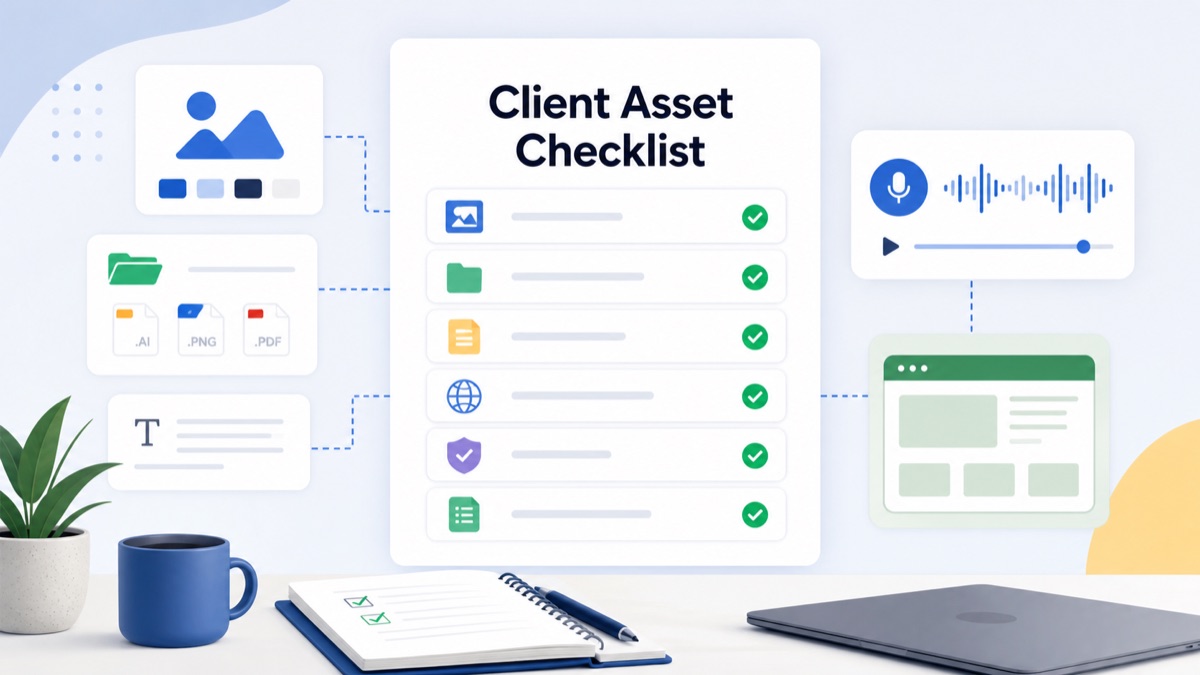
Client Asset Checklist for Agencies: Stop Chasing Files Before Kickoff

Client Asset Checklist for Agencies

Client assets are not admin details. For agencies, consultants, creative studios and freelancers, missing files and access can decide whether a project starts cleanly or spends the first two weeks chasing logos, copy, brand rules, CMS credentials, analytics access and approval owners.

The problem is rarely one missing logo. It is the unclear status around every input: who owns it, whether it is final, whether legal needs to review it, whether the client expects the agency to create it, and whether the timeline assumed it was ready.

This guide gives agencies a practical client asset checklist, a request template, a dependency table, a raw-client-message example and a workflow for turning asset collection into scope clarity instead of another follow-up thread.

Read More

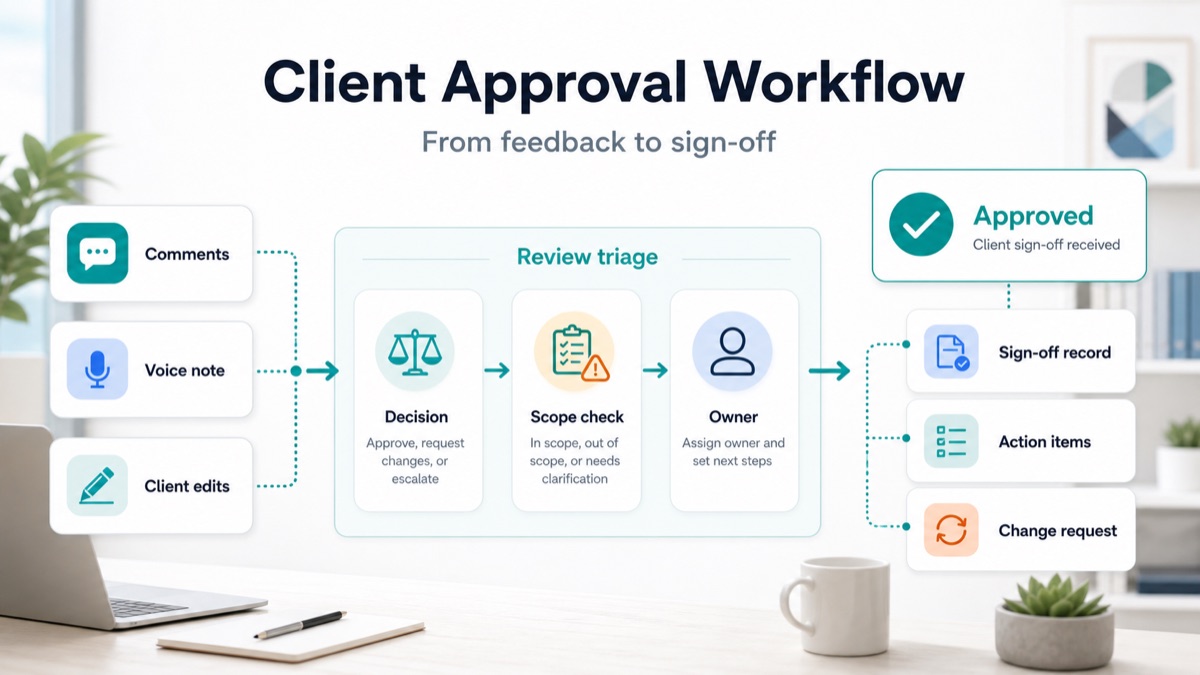
Client Approval Workflow for Agencies: From Feedback to Sign-Off

Client Approval Workflow

Client approval should be the point where a project moves forward with confidence. In practice, many agencies treat approval as a vague comment in an email thread: “looks good,” “approved with changes,” or “we can move ahead after legal checks the claim.” Those phrases sound positive, but they do not always say which version is approved, who approved it, what still needs work or whether a new request changed scope.

For agencies, consultants, creative studios and freelancers, a weak approval process creates stalled launches, re-opened revisions and unpaid work. Feedback turns into tasks too quickly. Stakeholders approve different versions. New requests get bundled into sign-off.

This guide gives agencies a practical client approval workflow: collect feedback, capture voice context when comments are vague, run a scope check, record sign-off evidence and separate approved work from change requests.

Read More


Follow the Journey


Subscribe to our monthly newsletter to discover audio, vocal and ai innovations!