VocalJet blog

Client Scope Clarification Questions for Agencies

Client Scope Clarification Questions for Agencies

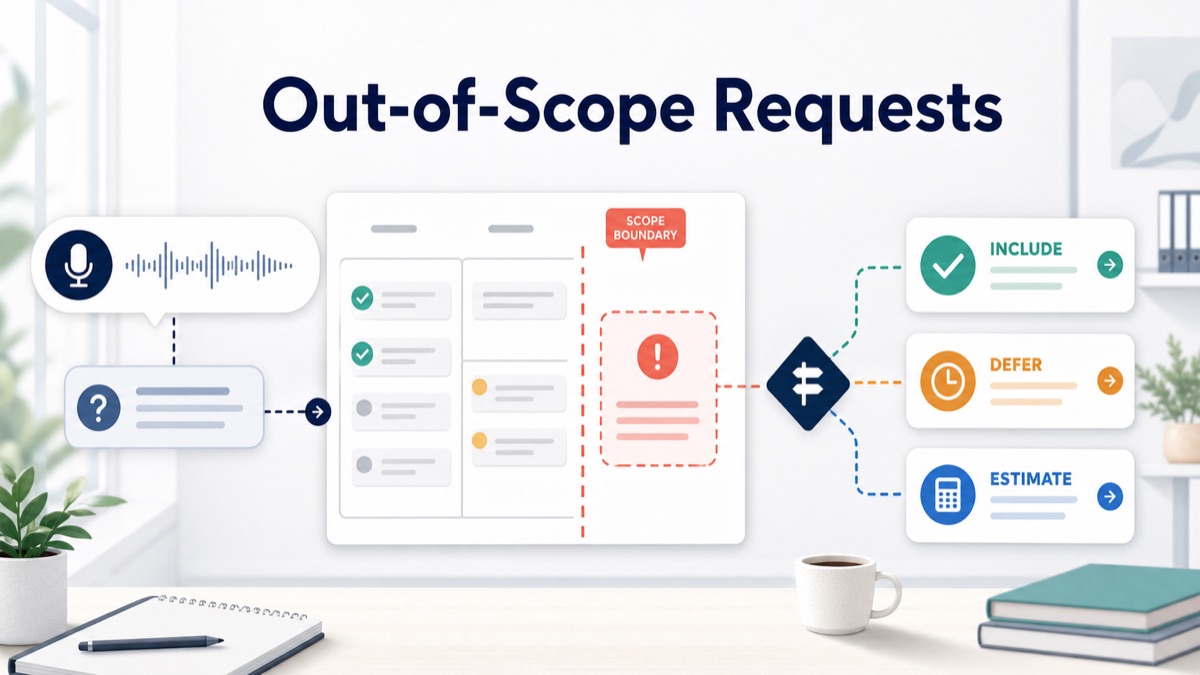
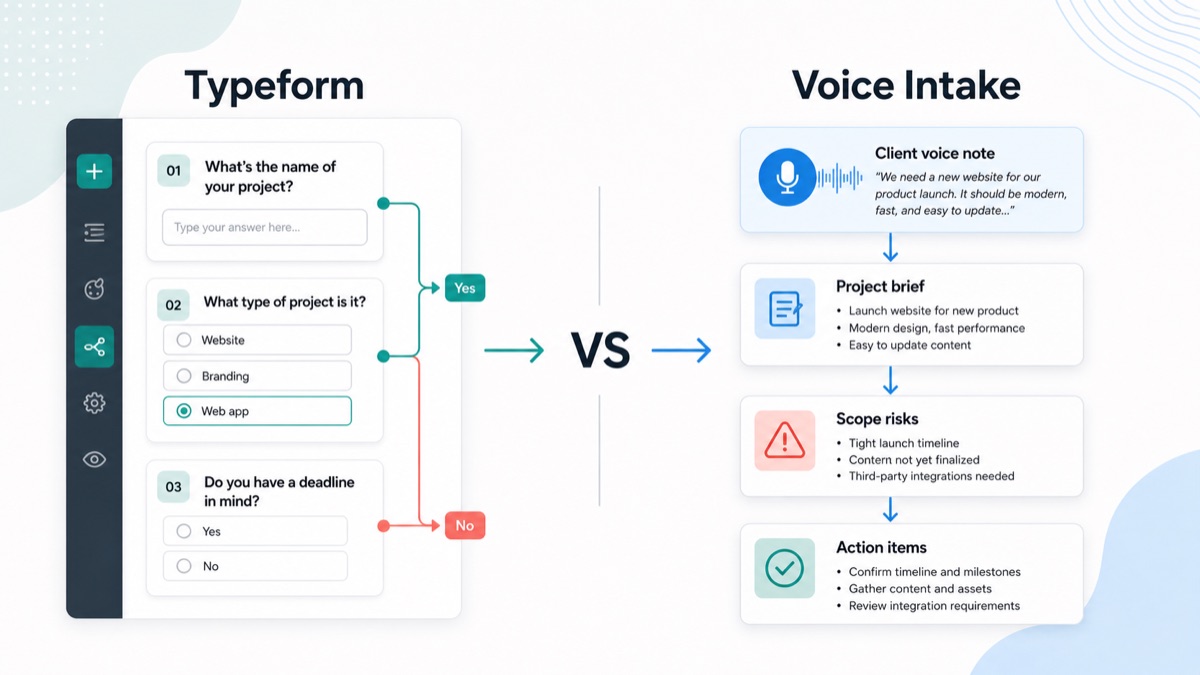
Client scope clarification questions help agencies turn a promising but vague client request into a project the team can price, schedule and deliver without guessing.

For agencies, consultants, studios and freelancers, the expensive part of unclear scope is rarely the first conversation. It is the hidden work that appears later: another stakeholder, a missing content owner, a “small” extra page, a new approval round, a platform constraint or a deliverable the client assumed was included.

Read More

Creative Brief From Client Notes: A Practical Guide

Creative Brief From Client Notes: A Practical Guide

Creative projects often start with useful but messy client notes. A client explains the goal in a meeting, adds brand preferences by email, shares a few examples in a chat thread, then records a voice note with the real reason the campaign matters.

For agencies, freelancers and creative studios, the risk is not a lack of input. The risk is that the input never becomes a clear creative brief. When that happens, the team starts designing, writing or pitching against assumptions instead of confirmed context.

Read More

Design Revision Feedback: How to Get Clearer Client Comments

Design Revision Feedback: How to Get Clearer Client Comments

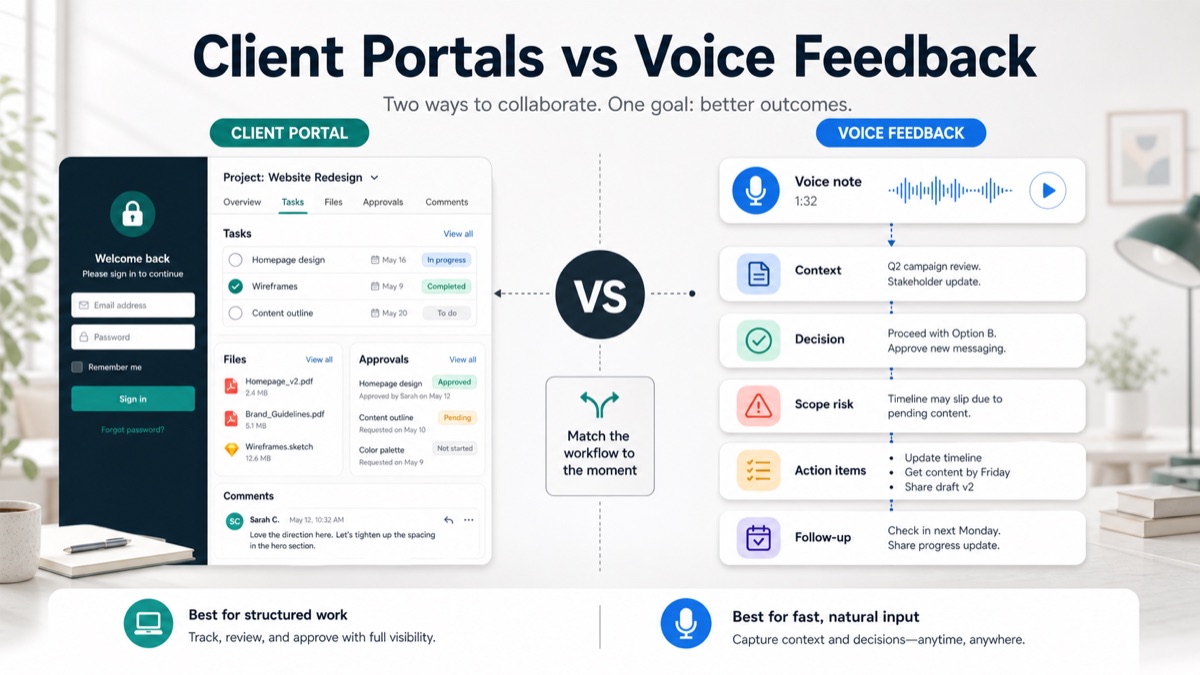
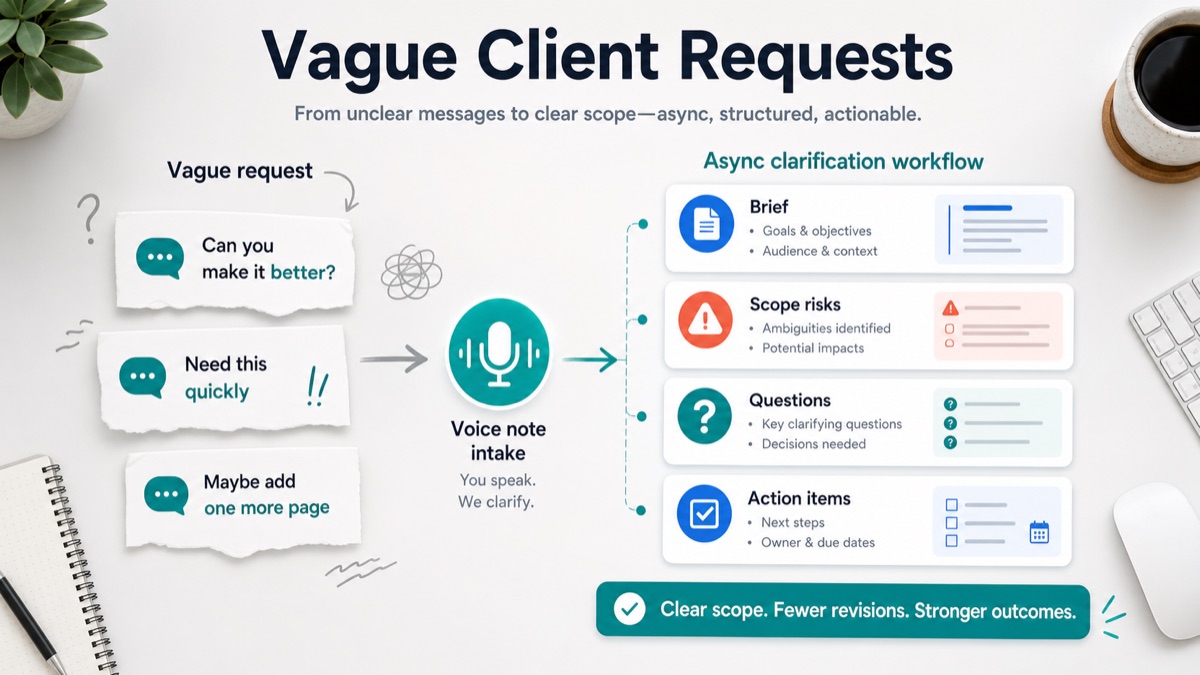
Design revision feedback often sounds simple until the team tries to act on it. A client says the homepage should feel more premium, the layout needs more energy, the headline is not right, or the design is “almost there” but something feels off.

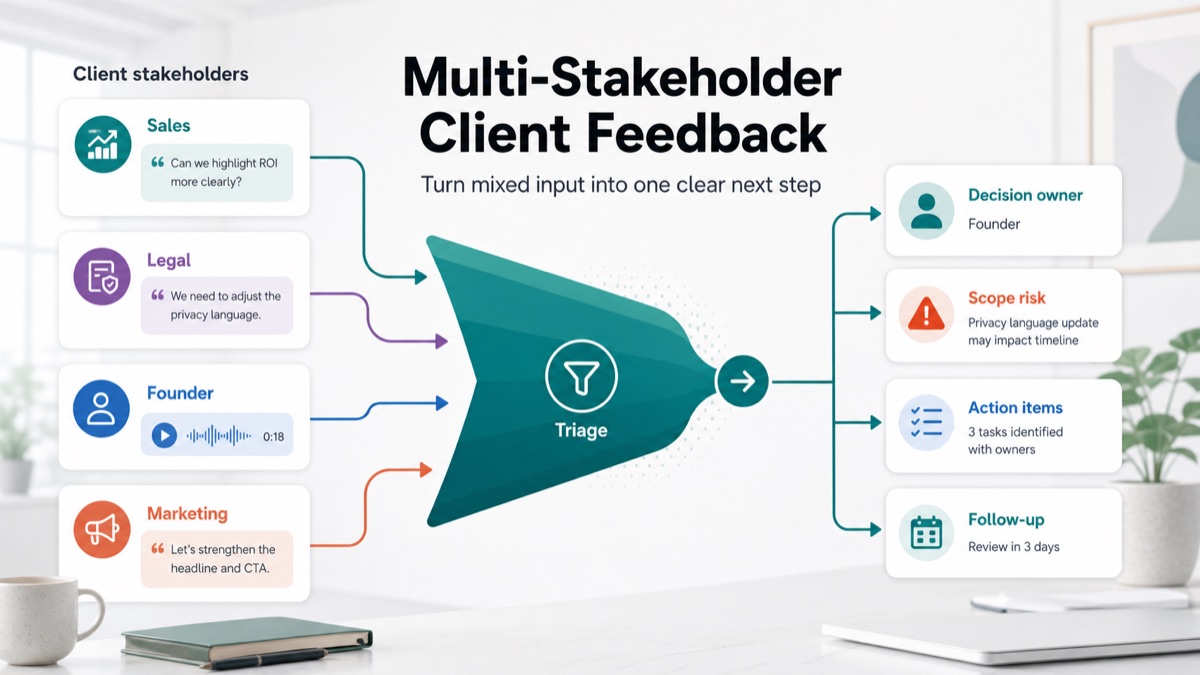
For agencies, freelancers and creative studios, vague comments create revision churn. Designers guess. Project managers ask follow-up questions. Stakeholders add new ideas late. Scope expands quietly because nobody separated approved edits from new requests.

Read More

Website Project Brief Template for Web Design Clients

Website Project Brief Template for Web Design Clients

A website project brief should protect the project before design starts. For web design agencies, freelancers and creative studios, the risk is rarely that the client has no opinion. The risk is that the client has scattered opinions, incomplete content, unclear stakeholders and hidden expectations that only appear after the first mockup.

This guide is for client-facing teams that need a practical way to collect website context, turn it into a usable brief, and separate confirmed scope from assumptions before proposal, kickoff or revision rounds.

Read More

Client Discovery Notes: How Consultants Can Capture Context Faster

Client Discovery Notes: How Consultants Can Capture Context Faster

Consulting projects rarely fail because nobody talked. They fail because the context from the first conversation never becomes a usable operating document.

The client explains the situation in fragments. One stakeholder describes the business problem. Another mentions the timeline. A third person casually adds a hidden dependency. By the end of the discovery call, the consultant has pages of notes, but not a clear picture of goals, constraints, risks, ownership and next steps.

Read More

Client Follow-Up Email After Feedback: Templates and Workflow

Client Follow-Up Email After Feedback

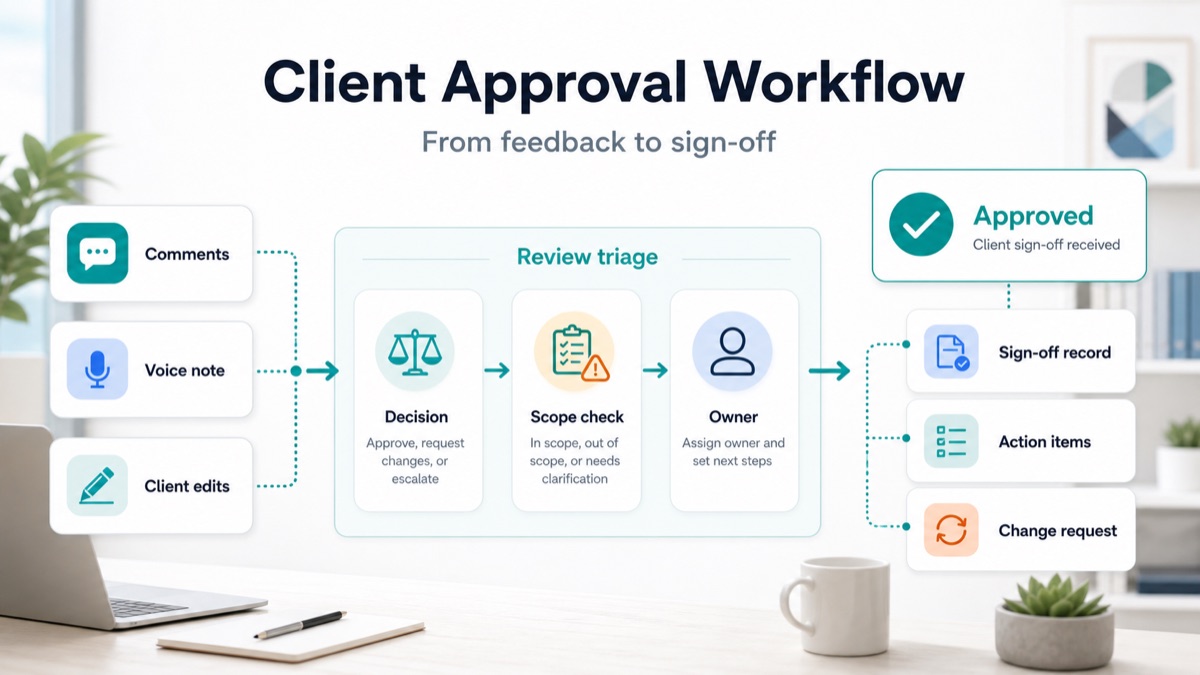
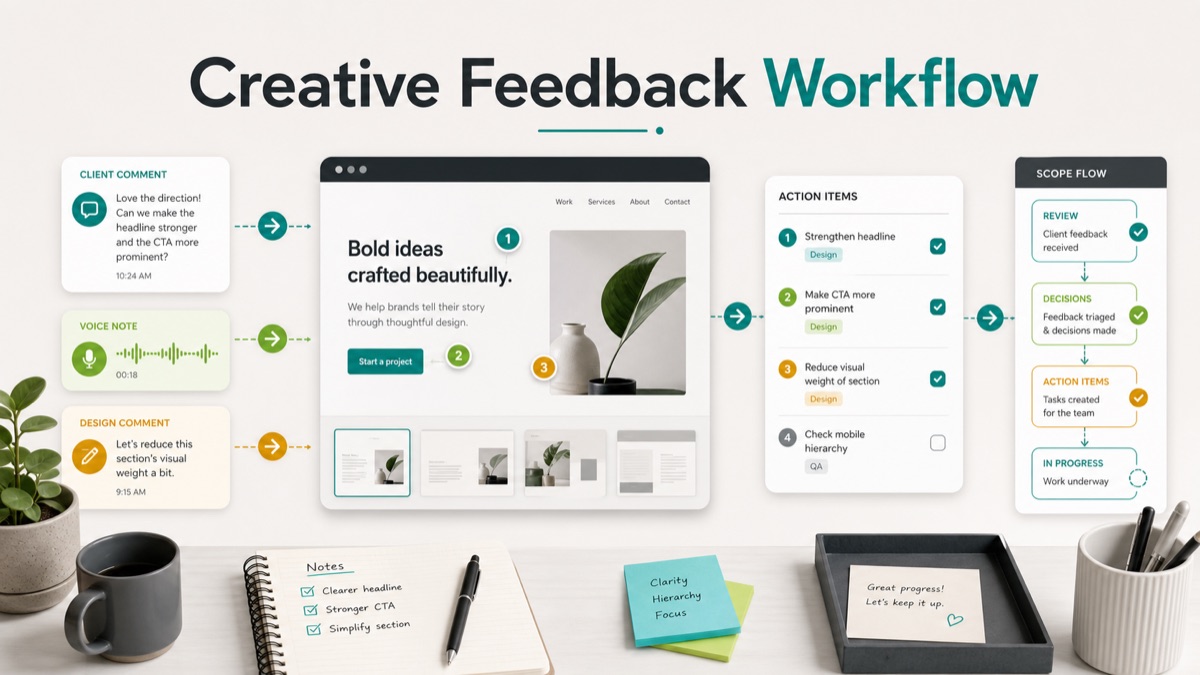
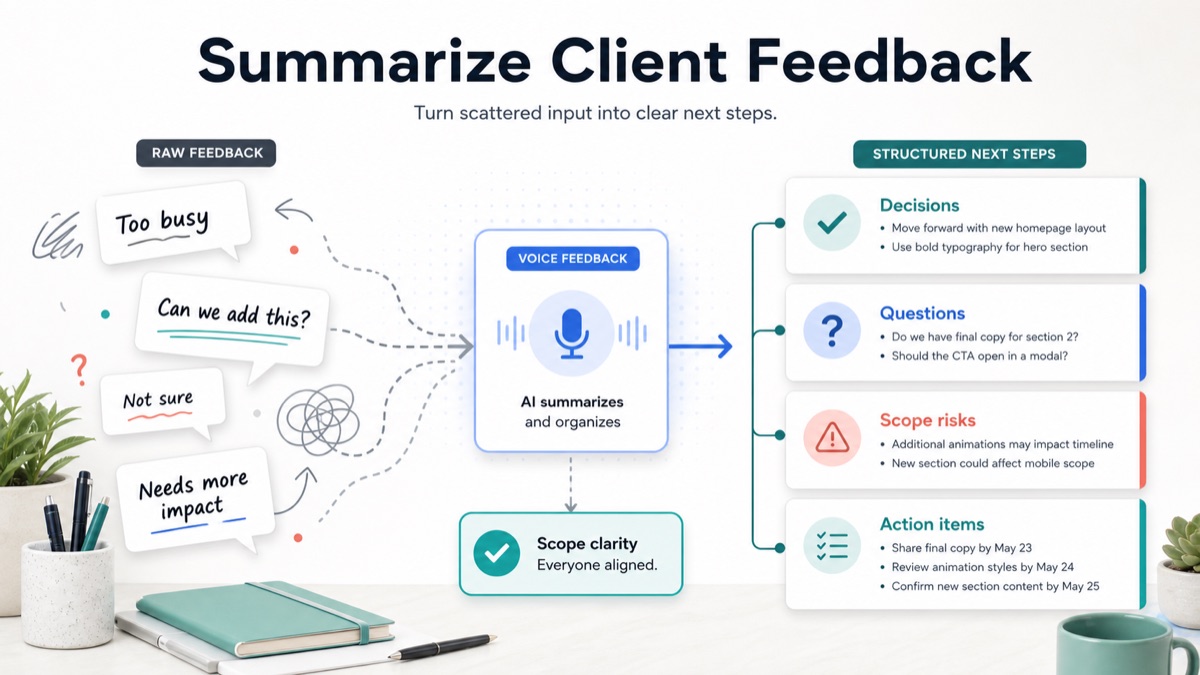
Client feedback does not create progress by itself. Progress starts when someone turns scattered comments, voice notes, screenshots and stakeholder opinions into a written next-step summary the team and client can both trust.

For agencies, consultants, studios and freelancers, that summary is usually the moment where revision churn either shrinks or expands. If the follow-up email is vague, the team starts revising against assumptions. If the summary is too slow, momentum drops and feedback threads multiply. If scope changes are not separated from approved edits, unpaid work sneaks in.

Read More

How to Prevent Scope Creep During Client Intake

How to Prevent Scope Creep During Client Intake

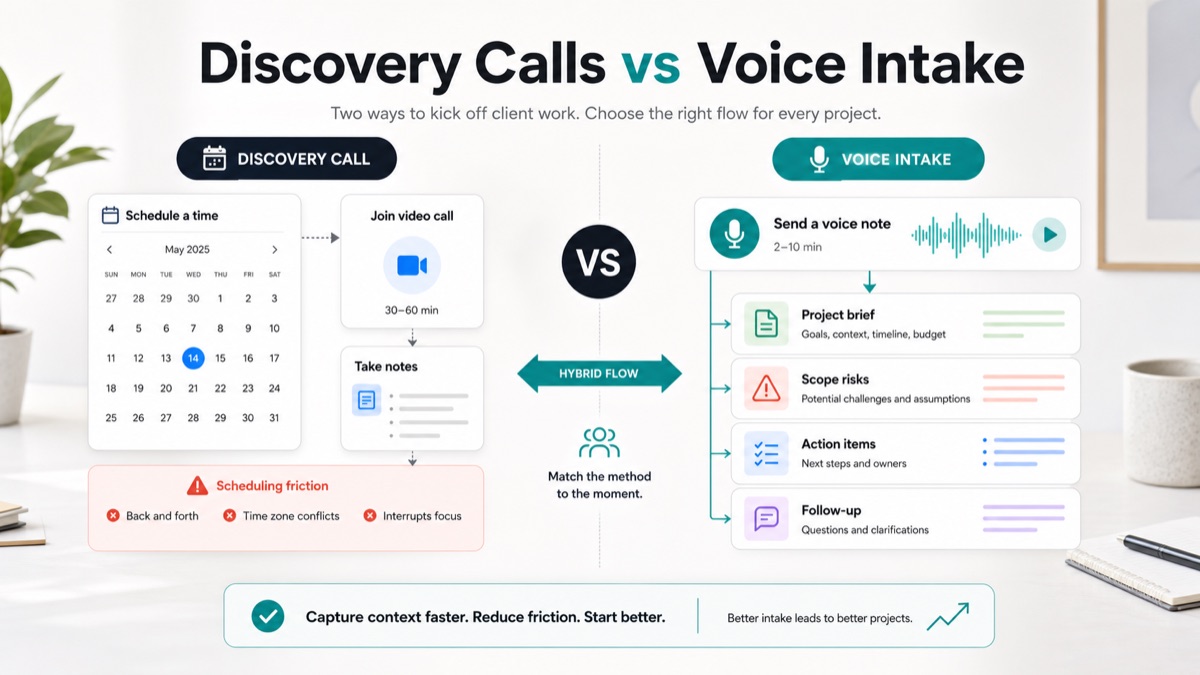
Scope creep usually starts before the work starts. A client asks for a new website, campaign, brand refresh, audit or consulting project, but the first request leaves out the decision-makers, approval process, content ownership, technical constraints, hidden dependencies and what “done” actually means.

For agencies, consultants and freelancers, that missing context becomes unpaid strategy, extra revision rounds, vague feedback and awkward pricing conversations later. The fix is not a longer contract template alone. The fix is a better intake workflow that turns client context into scope boundaries before proposal or kickoff.

Read More


Follow the Journey


Subscribe to our monthly newsletter to discover audio, vocal and ai innovations!