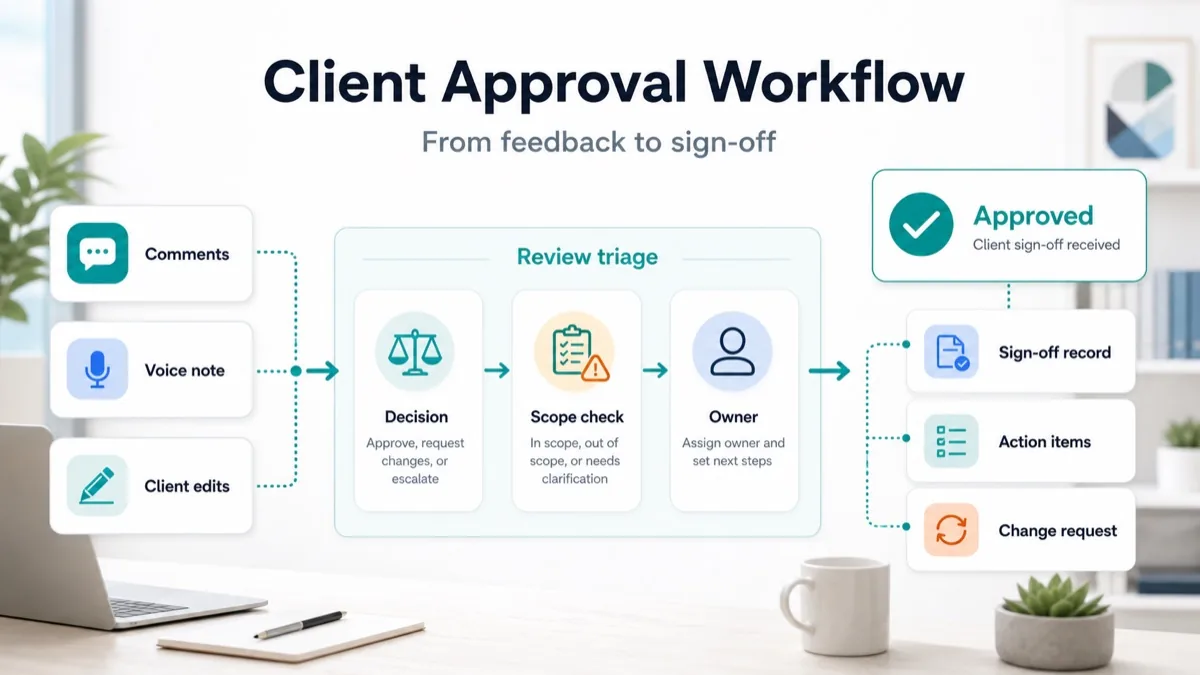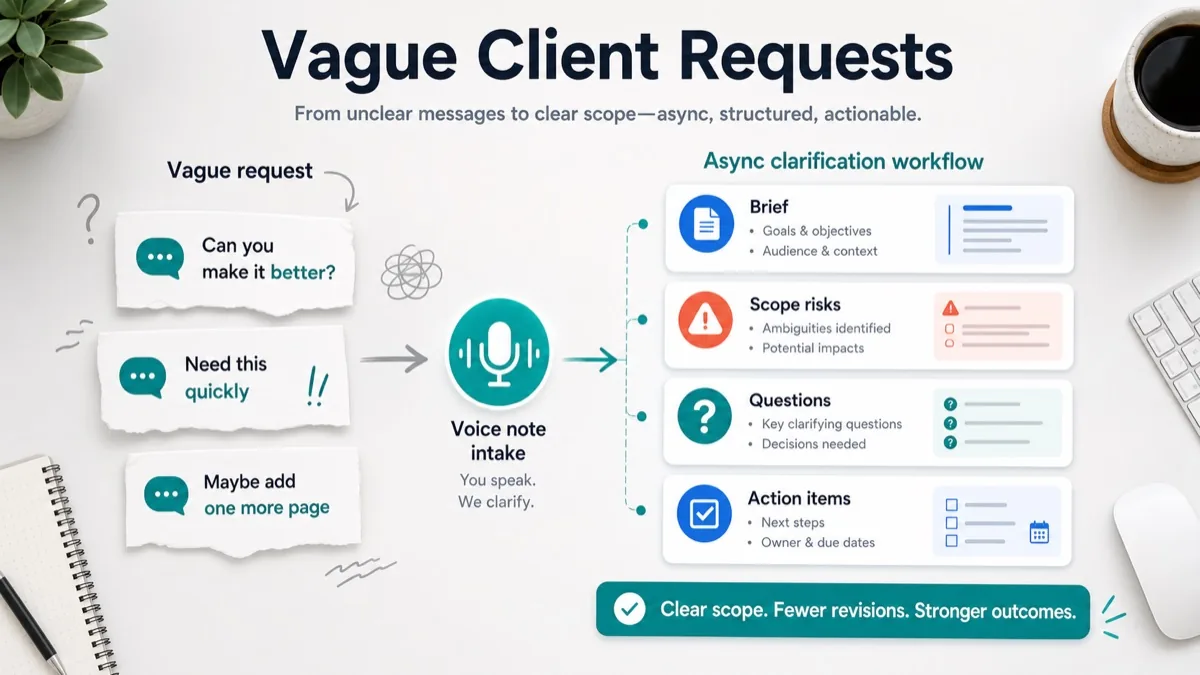

A client brief and a statement of work are often treated like interchangeable documents. For agencies, consultants, creative studios and freelancers, that mistake creates risk before the project even starts.
More context
The client brief explains the context: what the client wants, why it matters, who is involved, what constraints exist and what still needs clarification. The statement of work turns that context into commercial boundaries: deliverables, exclusions, responsibilities, timeline, acceptance criteria and change rules.
If the brief is vague, the SOW inherits assumptions. If the SOW is written too early, the team may price unclear work, miss hidden dependencies or promise revisions that should have been scoped separately. This guide gives client-facing teams a practical way to move from raw client context to a usable brief, then from brief to scope-ready SOW inputs.