
Audio notes you can find again


Record or upload spoken notes, keep them in project folders and use the transcript to find the context you need.

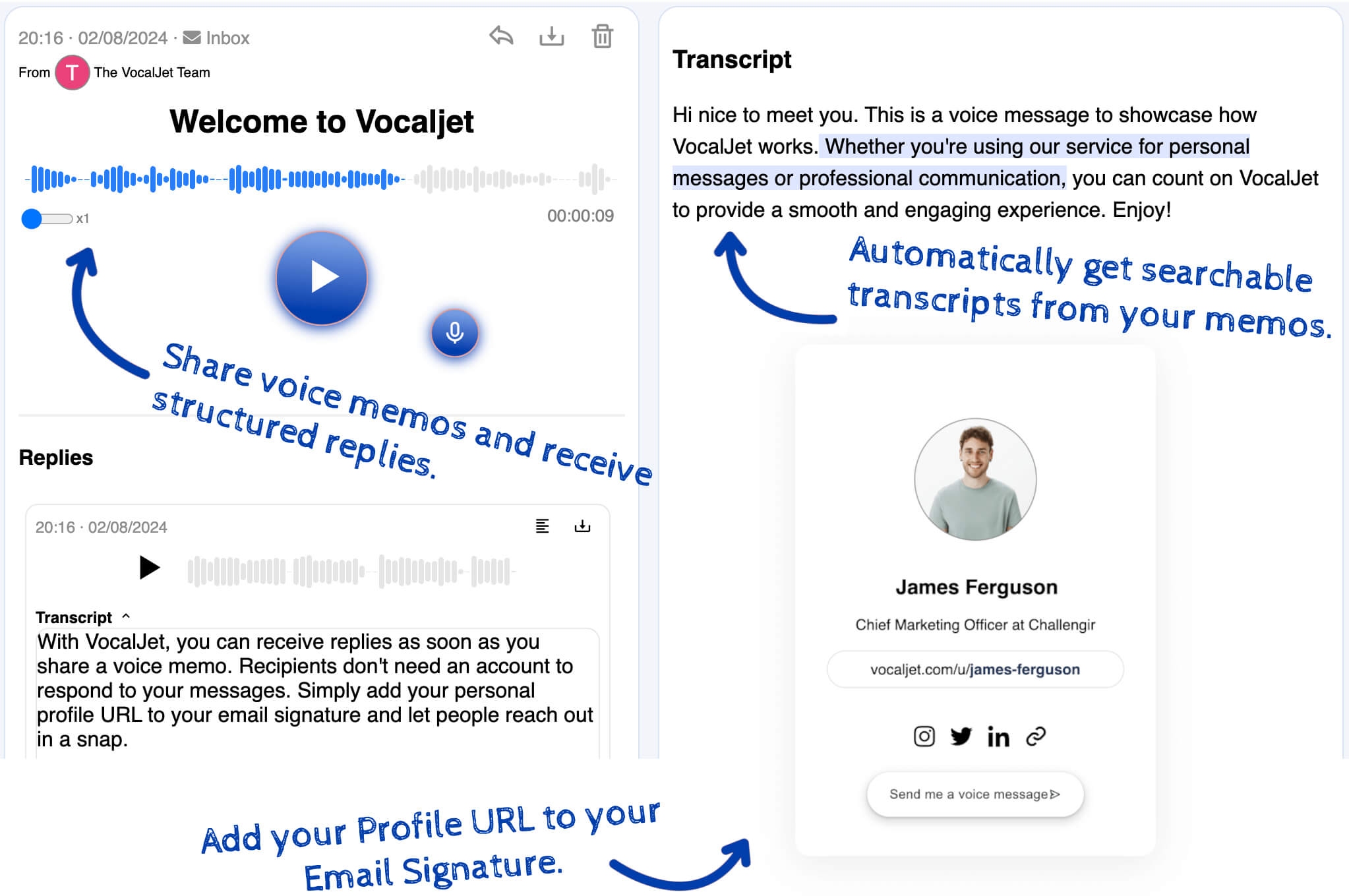
VocalJet recording and voice sharing interface
VocalJet app preview

Give each note a job

Organize around the client or decision you will need to revisit.

A useful naming pattern

Use a date, project and topic: 2026-10-29 — Northstar website — homepage feedback. This fictional example makes the note easier to distinguish from another recording called “Untitled”.

A manageable folder

Group notes by client or active project. Keep discovery context and revision decisions easy to recognize, and review old notes when the project closes.

Record, organize, review

Use the audio for nuance and the transcript for finding details.

  1. Capture: record a note or upload a saved audio file. Audio-file uploads require a plan that includes them.
  2. Name it: include the project and the subject before you forget the context.
  3. Organize: place the note in the relevant folder.
  4. Search: look for a distinctive word from the transcript, such as a deliverable or deadline.
  5. Confirm: check names, numbers and decisions against the recording before acting on them.

For the capture workflow, see the audio note taker. For the text step, see voice memo transcription.

A practical review method

Find the context after the conversation

Organize audio notes by project, name recordings consistently and search transcript text. Keep the source separate from the decisions you confirm.

Choose a naming pattern you can keep using

Use a project, date and topic, such as “Northstar — 30 October — homepage approval.” This is a fictional naming example. A stable project label is more useful than a different shorthand in every recording. Rename a note while the context is still clear.

Create a folder for the active client or project and move related notes into it. Folders organize the recordings in your account; they do not establish task ownership or a shared approval process. Keep the official decision log in your project workspace.

Search for the statement, then check its meaning

Search the transcript for a distinctive deliverable, name or phrase, then replay the relevant recording. A search match finds wording, not the current approved decision. A later conversation may have changed the plan.

When you use an old note, record which version or date it refers to and check whether it has been superseded. Copy the checked passage into your working document with its source reference. Do not infer agreement from a note that only records a possibility or an unanswered question.

Keep the decision separate from the recording

A saved note is useful context. A confirmed brief tells the team what to do next.

After reviewing client notes, write down the agreed action, owner and open question. The free client brief template gives you a place to assemble those answers and download a draft.