01Start a new message or continue a conversation
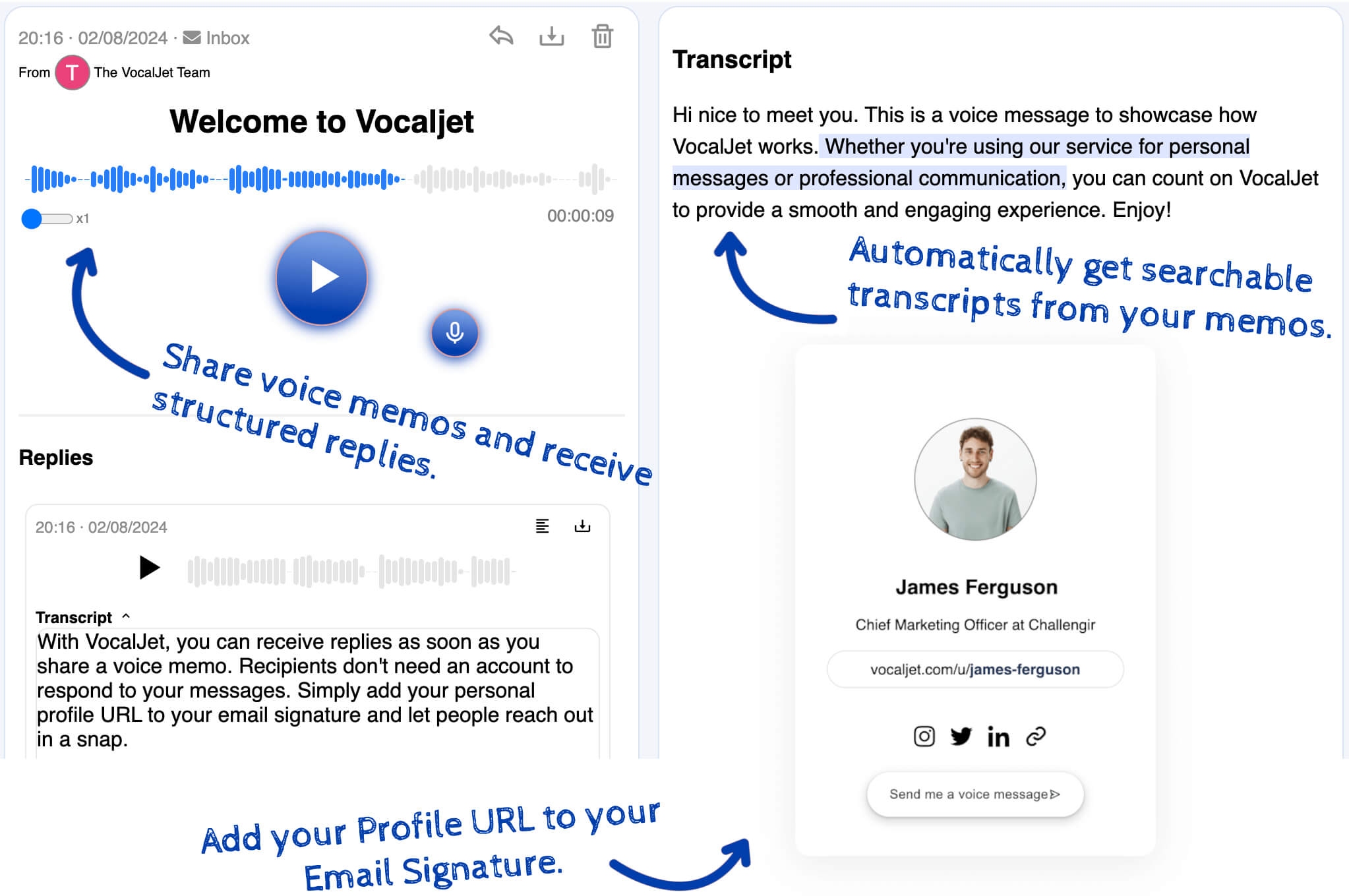
A personal profile link lets a client send you a new voice message. A saved recording has its own sharing link so a recipient can listen and reply to that specific message. Choose the route that gives the recipient enough context.
The recipient uses a browser and microphone permission rather than creating a VocalJet account. Sending asks for a name, with email optional. Your own message library requires an account. This is asynchronous messaging; the workflow is not a live call or a shared team chat system.
02Keep the exchange easy to follow
Use one subject per message and put exact links, dates or spelling in the accompanying written text. When the conversation changes direction, state which request you are answering so a listener does not have to infer the connection.
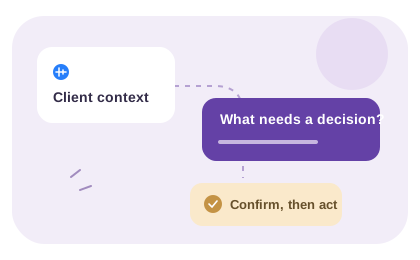
Review the recording and transcript before writing the decision in your project workspace. A voice reply is not automatically an approval or an assigned action. If the client needs to show a screen or mark a specific visual element, use a complementary visual tool and keep the references together.