01Ask what belongs in the first delivery
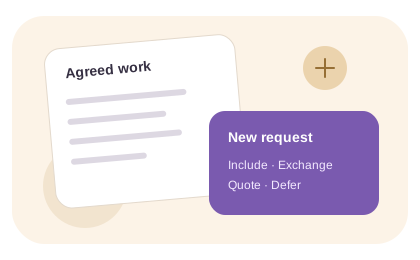
Have the client distinguish the immediate outcome from possible later work. Ask which deliverables they expect, what they will supply and who approves the result. Record a new language, integration or extra format as a possibility until it is discussed.
For a fictional website enquiry, “three pages for launch” and “perhaps a customer portal later” should stay separate. The portal is an open question for discovery, not a hidden item to include in the first estimate.
02Resolve dependencies before quoting
Check who supplies copy, access, assets and approvals, and what happens if those inputs arrive late. Use the recording and transcript to identify uncertainty, then write the proposed boundary in the brief and ask the client to confirm it.
VocalJet preserves the intake context; it does not interpret a contract or detect scope risk automatically. This page is a planning method, not a guarantee that scope will never change. Keep the agreed scope and any subsequent change decision in your project documentation.
A pre-proposal boundary note is: “First delivery: [deliverables]. Later possibilities: [ideas]. Supplied by client: [inputs and owner]. Excluded or unresolved: [items]. Estimate can be confirmed when: [decisions].” The fictional Northstar enquiry leaves the CRM question and unapproved budget visible instead of assuming they are agreed.