Make incoming client context usable by delivery. Name the intake reviewer, separate what is ready to estimate from what is missing, and hand over checked facts with a decision owner.
From a vague website request to a brief you can price
Use intake to separate confirmed work, missing information and assumptions before sending a proposal.
Fictional worked example
What the client says
We need a cleaner website before our launch in six weeks. Probably three pages. Our founder will approve it, but sales may have ideas too. We have some photos; the copy is not ready.
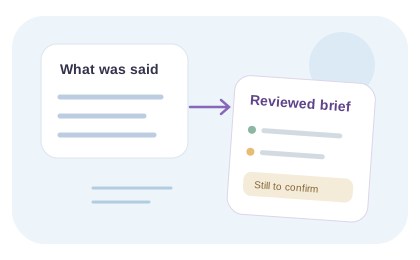
A useful intake captures the deadline, requested pages, missing copy and approval uncertainty. It does not treat every suggestion as agreed scope.
What to confirm before pricing
Deliverables: identify the three pages and the revision allowance.
Dependencies: name the person supplying copy and approved images.
Approvals: confirm whether sales can request changes or the founder makes the final decision.
Scope: ask whether branding, CRM setup and extra layouts are excluded.
Next step: resolve those questions before committing to the six-week date.
This example illustrates a briefing method. It is not a customer case study or a measured product result.
Separate facts, assumptions and missing inputs before you estimate. The six-week target in the fictional example explains the client’s urgency; it does not prove that the proposed delivery is feasible.
01
Assign a reviewer before sending the invitation
Decide who checks the incoming request and who can commit the agency to a scope, estimate or date. These may be different people. A recording captures context; it is not an approval from the account lead or delivery team.
Ask the client to identify their project and approver, then explain what the agency will do with the response. A shared voice link lets clients record without an account. Your own library uses a VocalJet account; do not assume a shared team inbox or role-based approval system from that capability.
02
Make the handoff usable by delivery
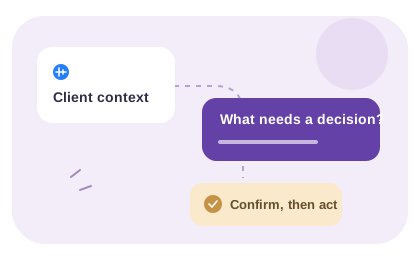
The reviewer should pass on the recording reference, checked facts, unknowns and the decision required. Write who will resolve each unknown and where approval will be recorded. Keep deadlines proposed by the client separate from dates the agency has accepted.
Use your existing project system for assignment and approval. VocalJet folders can help organize recordings, and transcript search can help retrieve them. They do not replace project permissions, task ownership or a signed scope. Test the intake process with a representative enquiry before changing your team’s whole workflow.
Manual handoff record: “[Project] — recording reference; confirmed deliverables; missing inputs and their owners; proposed deadline; estimate approver; next decision.” Compare the requested timeline with the unresolved inputs in the fictional Northstar handoff before copying the structure for a real enquiry.
Copy a proposal-readiness check+
Confirmed objective:
Exact deliverables:
Available inputs:
Missing inputs and their owners:
Decision authority:
Target date vs confirmed schedule:
Assumptions to validate:
Items excluded or deferred:
Short answer
Evaluate agency intake software against the handoff it must support: who reviews the enquiry, who can approve an estimate and what delivery receives. VocalJet captures voice messages and transcripts. Keep ownership, approval and the accepted scope in your existing project process.
Client intake software vs forms
The right intake tool depends on whether the client already has simple answers or needs to explain context.
Option
Static intake form
Best for
Repeatable requests with fixed fields
Consider
Check unanswered fields and unclear responses
Output
Structured field responses
Discovery call
Best for
High-value sales and live decisions
Consider
Requires scheduling and a reliable decision record
Output
Live discussion and your meeting notes
Project management portal
Best for
Existing clients already trained on a workflow
Consider
Check the client’s access and onboarding needs
Output
Project records in the chosen tool
VocalJet voice intake
Best for
Context-heavy agency projects
Consider
Best when the team reviews and confirms a drafted brief
Output
Voice recording and transcript for review
Best use cases
Website redesign intake
Capture audience, constraints, content gaps, approval flow and hidden dependencies before scoping.
Brand and creative briefs
Let clients explain subjective direction, tone and examples without flattening the context into short fields.
Retainer onboarding
Collect the background, goals, stakeholders and recurring risks before the first month starts.
Revision clarification
Turn messy client comments into decisions, questions and follow-up tasks.
Workflow steps
01
Assign the intake reviewer
Decide who checks the incoming context and who can approve scope or timing.
02
Collect the client’s explanation
Share a profile or prompt link, asking for the project reference and the outcome the client needs.
03
Hand off checked context
Give delivery the recording reference, confirmed facts, open questions and decision owner in your project workspace.
Name one intake reviewer before sharing the link. They check the recording and transcript and collect missing facts. The person authorized to approve scope, price or timing may be someone else; make that distinction explicit.
What should delivery receive from the account team?
+
Pass on the source reference, confirmed deliverables, dependencies, open questions, decision owners and approval status. Keep the client’s requested date separate from the agency’s accepted date. A transcript by itself is not a delivery brief.
Does VocalJet provide agency approval routing?
+
The documented workflow provides recordings, replies, transcripts, folders and transcript search. Use your project workspace for roles, task assignment and approvals. Do not treat a shared voice link as a shared approval inbox.
How can an agency trial the intake process?
+
Use a representative, non-sensitive enquiry. Check the guest response, transcript review, missing-input follow-up and handoff to delivery. The process is ready only when the next reviewer can identify what is confirmed and what decision is still needed.
Create a voice intake link
Make incoming client context usable by delivery. Name the intake reviewer, separate what is ready to estimate from what is missing, and hand over checked facts with a decision owner.